
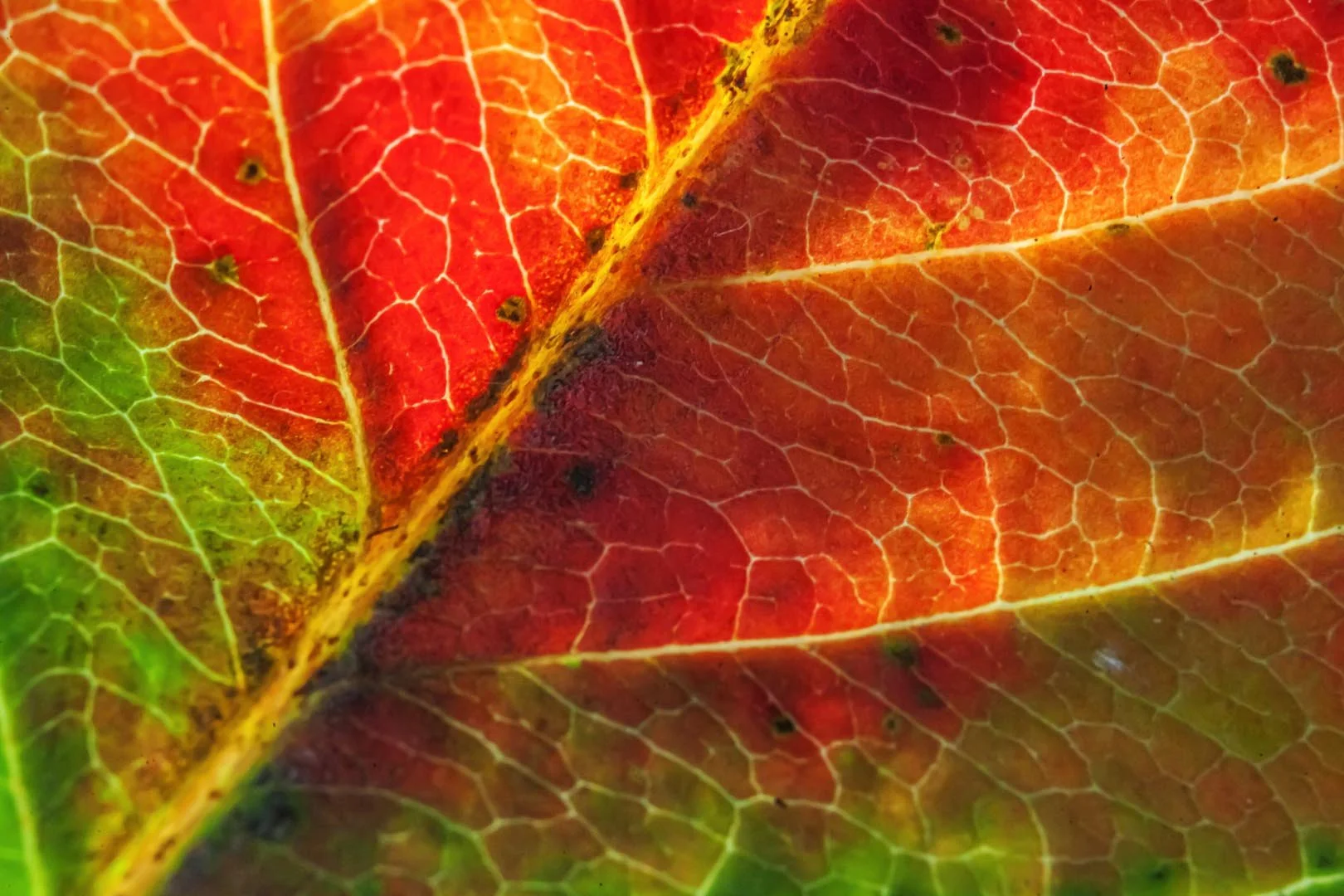
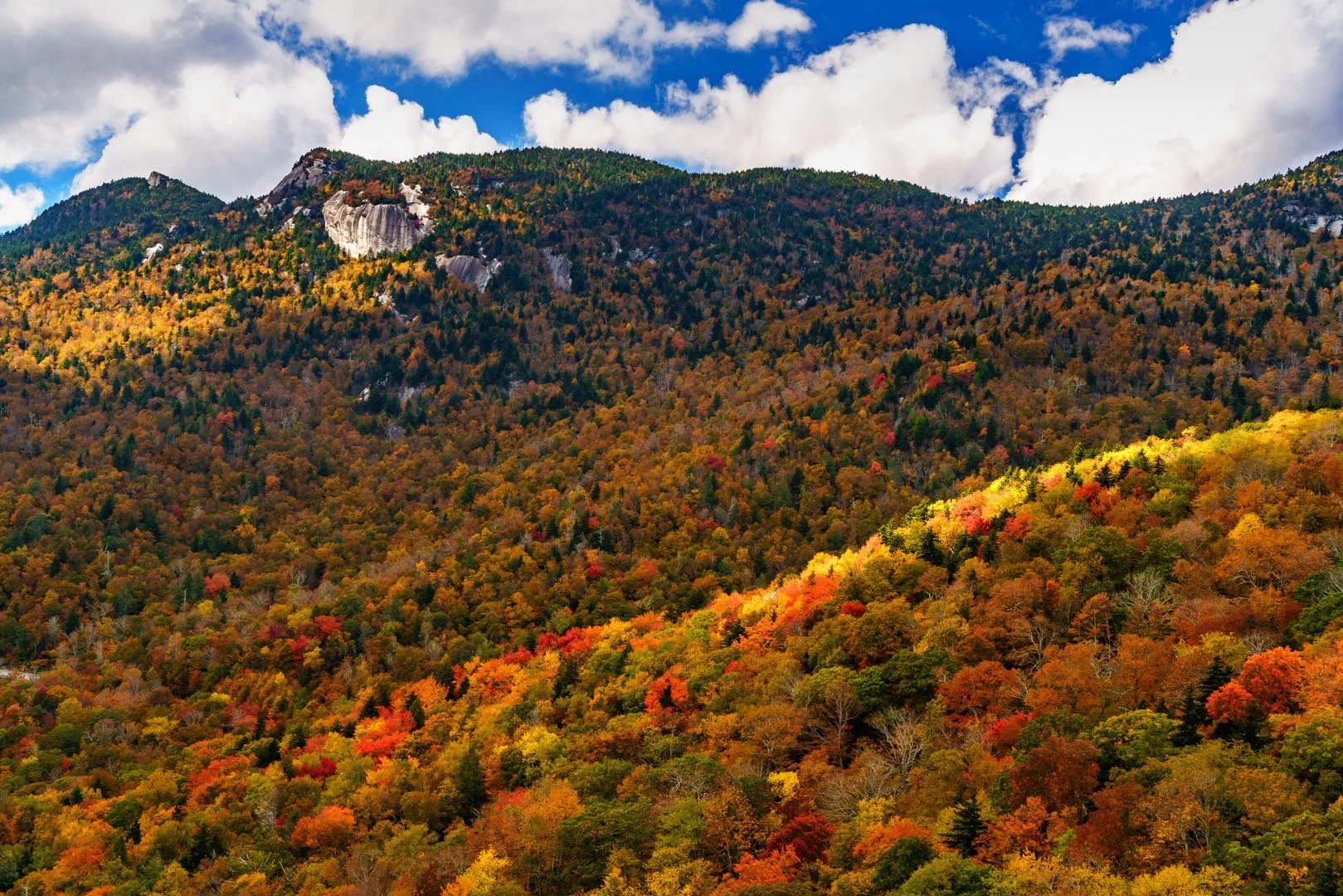
Every October, the Blue Ridge Mountains put on one of nature's most remarkable displays. Across Jefferson, West Jefferson, and Ashe County, the hillsides transform into a patchwork of brilliant reds, golden yellows, deep oranges, and warm browns.
It's a beautiful sight, but have you ever wondered what actually causes trees to change color?
The answer involves some fascinating biology. From the chemistry inside each leaf to the changing temperatures and daylight hours of autumn, trees undergo an extraordinary transformation as they prepare for winter.
At Brantley Tree Service, we spend our days working among the towering pines, mature oaks, maples, and other native trees that make the North Carolina High Country so remarkable. Understanding how trees grow, respond to their environment, and change throughout the seasons is an important part of working with them.
Let's explore the science behind those beautiful fall colors and what they can teach us about the trees growing around our homes.
The Secret Behind Green Leaves: Chlorophyll and Photosynthesis
To understand why leaves turn red, orange, and yellow, we first need to understand why they're green.
Throughout spring and summer, most deciduous trees produce large amounts of chlorophyll, the green pigment that plays an essential role in photosynthesis.
Photosynthesis is the process through which plants capture sunlight and use that energy to convert water and carbon dioxide into sugars. Those sugars provide energy and building materials that support the tree's growth, maintenance, and development.
During the growing season, chlorophyll is continually produced and broken down. Because so much of it is present in healthy green leaves, it masks many of the other pigments that exist within them.
But as summer comes to an end, something changes.
Days become shorter, nights become longer, and trees begin responding to these predictable seasonal signals. Chlorophyll production slows, existing chlorophyll breaks down, and the familiar green begins to disappear.
What's left behind is one of the most colorful transformations in nature.
Why Leaves Turn Yellow, Orange, and Red
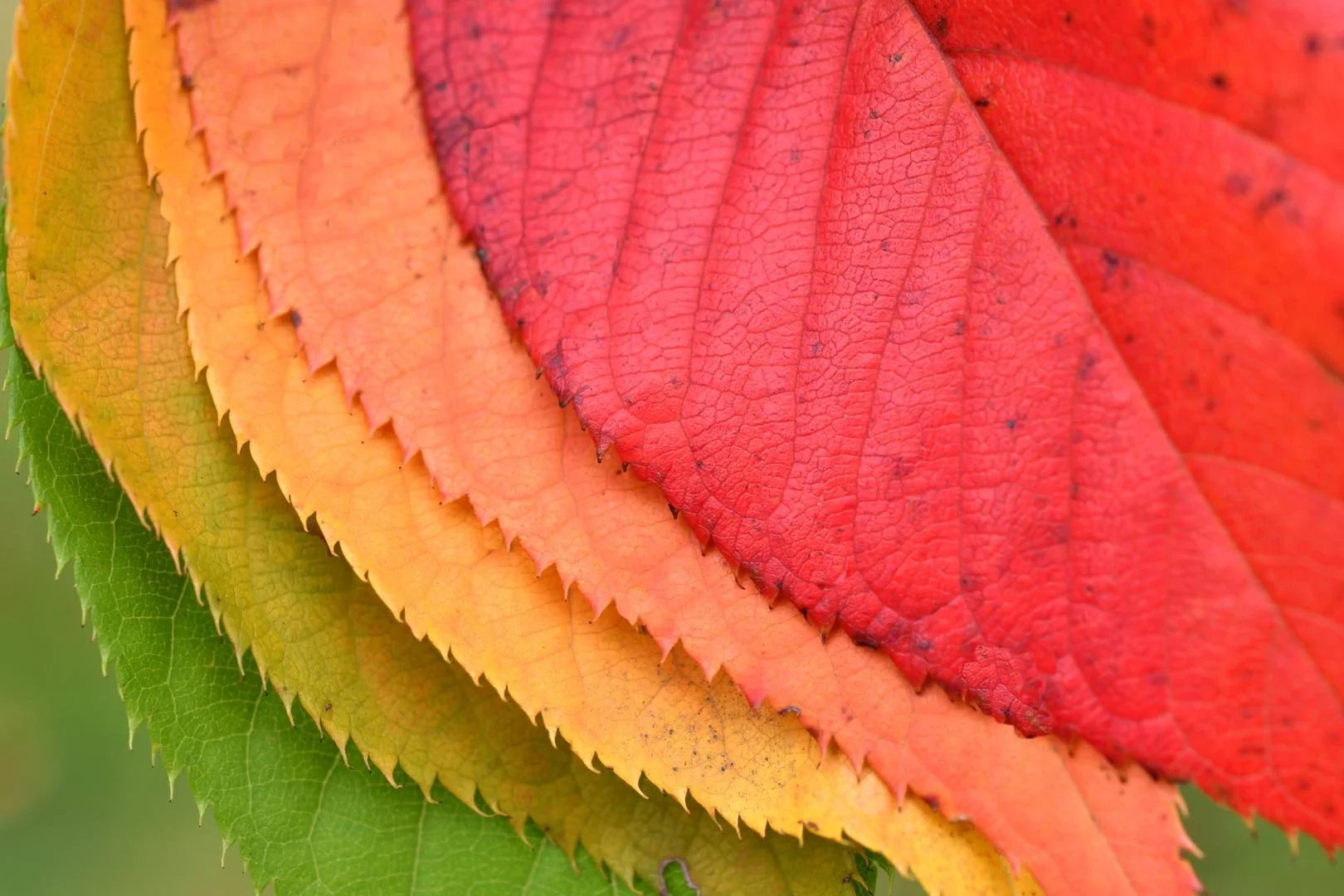
Here's something that surprises many people: much of the yellow and orange color we see in autumn has been hiding inside leaves throughout the summer. Leaves contain several groups of pigments, each responsible for different colors.
Yellow and Orange: Carotenoids
Carotenoids are pigments responsible for many of the yellow and orange shades found in autumn leaves.
They're present throughout much of the growing season, but their colors are usually concealed by chlorophyll.
As chlorophyll breaks down, these pigments become visible, producing the golden yellows and warm oranges we associate with fall.
The same general family of pigments contributes to the orange color of carrots.
Red and Purple: Anthocyanins
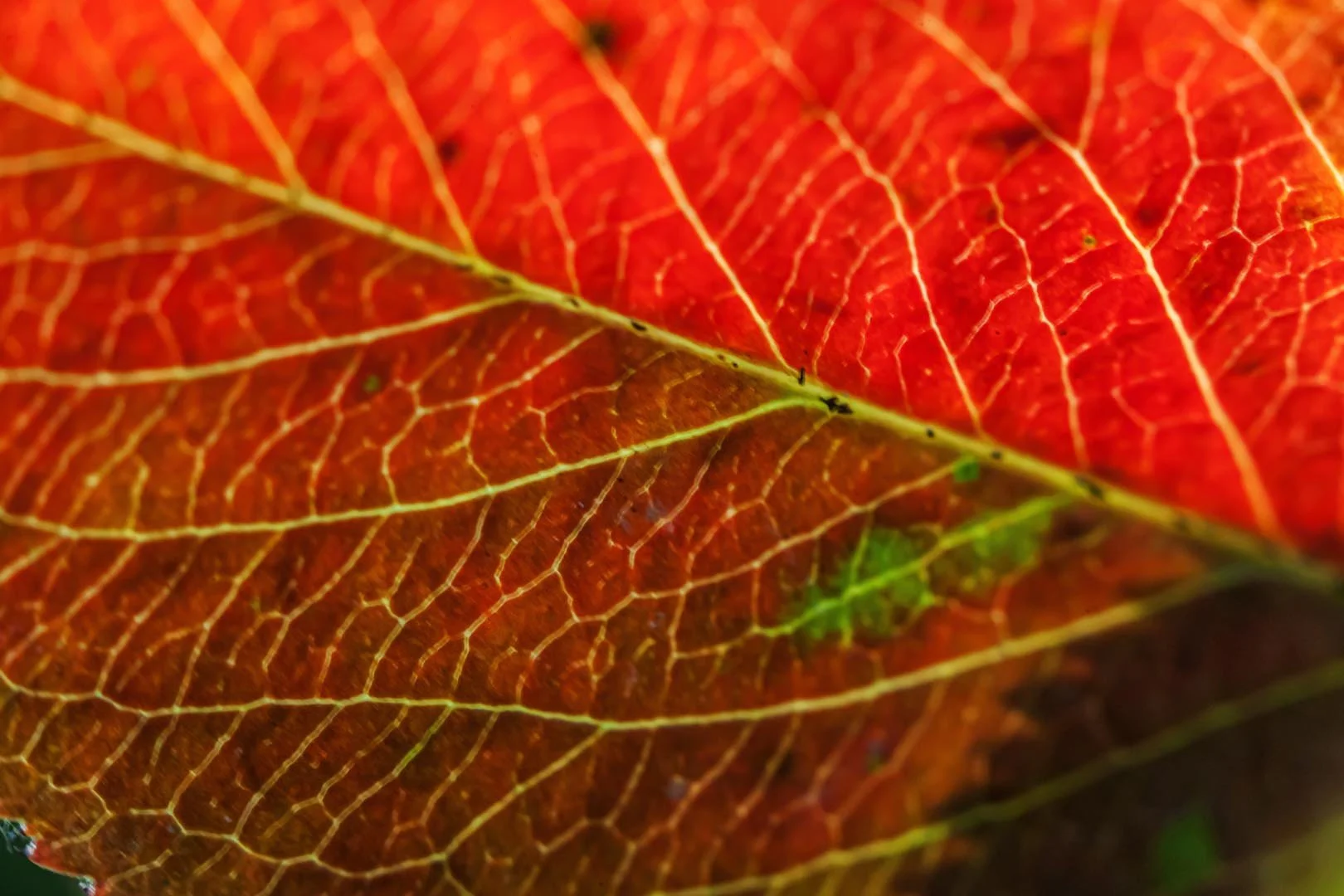
The brilliant reds and purples found in many maples, sourwoods, and blackgums come from a different group of pigments called anthocyanins.
Unlike carotenoids, much of the anthocyanin responsible for fall foliage develops during autumn itself.
Sunlight, accumulated sugars within leaf tissues, and cool nighttime temperatures can encourage anthocyanin production.
This helps explain why sunny autumn days followed by cool nights can produce especially striking red foliage.
Brown: The Final Stages of Leaf Aging
As leaves continue aging and other pigments break down, brown tones become more prominent. Tannins and other remaining compounds contribute to the brown appearance of many late-season leaves.
Different species naturally display different combinations of these pigments.
That's why an oak, maple, and tulip poplar growing beside one another can look completely different even when exposed to similar weather conditions.
Why Fall Colors Are So Spectacular in the Blue Ridge Mountains
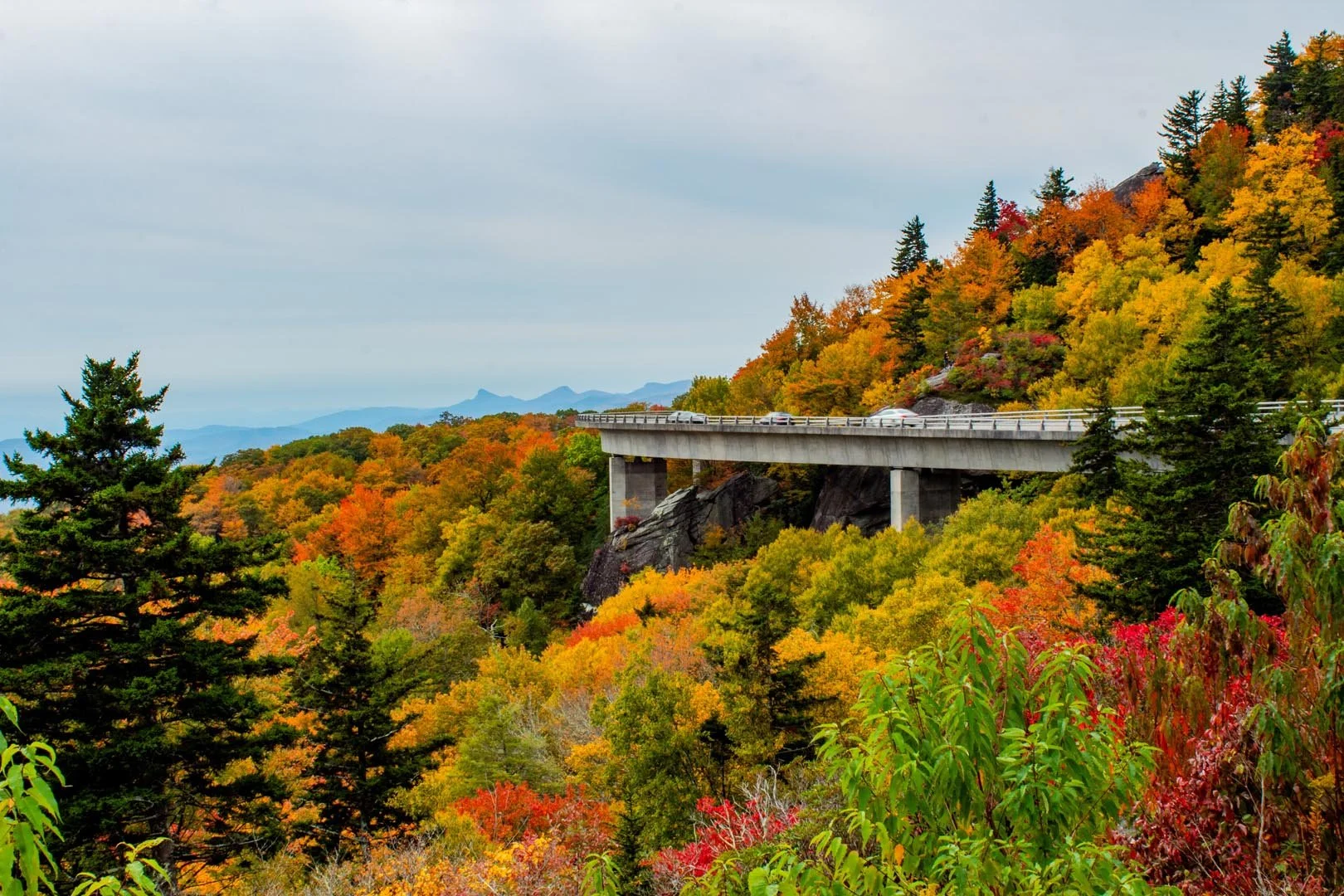
The mountains surrounding Jefferson and West Jefferson create an especially beautiful environment for autumn foliage.
One important factor is elevation. Higher mountain elevations typically experience cooler temperatures earlier than lower valleys. As a result, fall colors generally begin developing at higher elevations before progressing downslope.
This creates the familiar waves of autumn color seen across the Blue Ridge Mountains, where one ridgeline may already be displaying deep reds and oranges while a nearby valley remains predominantly green.
Tree diversity also contributes to the spectacular display. North Carolina's mountain forests contain numerous deciduous species, each responding somewhat differently to seasonal conditions. Red maples may display vibrant reds and oranges, sourwoods can develop striking red foliage, hickories often turn golden yellow, and many oaks transition through shades of red, russet, and brown.
Together, these overlapping colors create the breathtaking landscapes that make the North Carolina High Country so recognizable during October. For homeowners throughout Ashe County, these same seasonal changes are happening right outside their windows.
Does Certain Kinds of Weather Affect How Bright the Fall Colors Become?
Absolutely. While shorter days are one of the most dependable signals that autumn has arrived, weather plays an important role in determining the timing and intensity of fall foliage.
A combination of sunny days and cool nights, without a damaging freeze, often provides favorable conditions for vivid autumn colors. Sunshine supports sugar production within leaves, while cool nighttime temperatures can influence the development of red pigments. However, weather conditions throughout the growing season also matter.
Extended drought can stress trees, sometimes causing leaves to turn brown or drop before their usual fall color develops. Heavy rainfall, prolonged cloudy conditions, unusually warm autumn weather, and strong storms can also influence the timing and appearance of the season.
For fall 2026, NC State forestry researchers highlighted the possibility of especially variable foliage across North Carolina because of differences in drought, temperature, and rainfall.
The takeaway is fascinating: fall colors are not determined by a single cold night. They're the result of months of biological activity and environmental conditions working together. That's also why peak foliage dates can shift from one year to the next.
Why Do Trees Drop Their Leaves Before Winter?
Changing color is only part of a much larger biological process. As deciduous trees prepare for winter, they begin recovering certain nutrients from their aging leaves and conserving resources for the months ahead.
Near the base of each leaf stalk, a specialized region of cells develops what is called an abscission layer. This area gradually allows the leaf to separate from the branch, eventually leaving behind a small leaf scar.
Shedding leaves helps many deciduous trees limit water loss during winter, when cold or frozen soil can make water less accessible. It also allows trees to enter the colder months without maintaining a large canopy of delicate leaves.
Meanwhile, stored carbohydrates and nutrients help support the tree through dormancy and into the following growing season. Those fallen leaves have another important purpose.
As they decompose, they return organic matter and nutrients to the soil, contributing to the ongoing health of the forest ecosystem. What looks like the end of a growing season is actually part of an extraordinary cycle of renewal.
Why Do Pine Trees Stay Green?
If you've ever looked across the Blue Ridge Mountains in October, you've probably noticed something interesting.
While hardwood trees turn red, orange, and yellow, many pines and other evergreen conifers remain green. Evergreens have a different strategy for surviving winter. Their needle-like leaves are adapted to persist for multiple growing seasons. Their structure and protective surfaces help limit water loss, allowing many of these trees to retain foliage through colder weather.
But here's another interesting fact: evergreens lose needles, too. Eastern white pines, common throughout Ashe County, naturally shed some of their oldest needles, often during autumn. Older needles toward the interior of the canopy may turn yellow or brown before falling, even while healthy newer needles remain green near the branch tips.
This is a normal part of the tree's lifecycle. However, widespread browning of newer needles, dying branches, or unusually severe needle loss may indicate environmental stress, insects, or disease. Understanding the difference between seasonal needle shedding and genuine tree decline is particularly useful for homeowners with large pine trees near their homes.
Can Fall Leaf Colors Tell You Whether a Tree Is Healthy?
This is where understanding the science becomes particularly useful.
A tree displaying brilliant red or golden foliage is not automatically healthier than one producing muted colors. Likewise, a tree losing leaves earlier than its neighbors is not necessarily dying. Different species naturally change color at different times, and individual trees respond differently to sunlight, moisture, temperature, and growing conditions. However, unusual changes can sometimes provide clues about tree health.
A tree losing foliage substantially earlier than others of the same species, developing widespread brown leaves during summer, or showing isolated sections of dead branches may be experiencing stress.
The most important thing to understand is that leaf color alone cannot determine whether a tree is structurally safe. A tree may have beautiful autumn foliage while also developing cracks, internal decay, damaged roots, or structural weaknesses.
Similarly, a healthy mature tree can lose its leaves normally every autumn without presenting any unusual danger. For homeowners, it's important to consider the entire tree, including its trunk, major limbs, root system, location, and history of storm damage.
The Importance of Understanding Your Trees Before Winter
Fall is a wonderful time to appreciate the beauty of North Carolina's forests, but it also provides a useful opportunity to observe the trees around your property.
As leaves begin to fall, previously hidden branches become easier to see. Large dead limbs, unusual cracks, and structural concerns may become more noticeable.
In the Blue Ridge Mountains, this matters because trees must regularly withstand winter winds, freezing temperatures, snow, and occasional significant ice accumulation.
A large tree growing near a home, driveway, or other structure deserves particular attention if it has visible damage or has recently changed position.
Not every aging tree needs to be removed, and not every unusual symptom indicates a serious problem. Many mature trees remain healthy and structurally sound for generations.
Knowing when to preserve a tree, when to maintain it, and when professional removal may be necessary is an important part of responsible property care.
Caring for the Trees of Ashe County, One Property at a Time
At Brantley Tree Service, we appreciate the trees that make our mountain communities such beautiful places to live.
Our work throughout Jefferson, West Jefferson, Ashe County, and the surrounding Blue Ridge Mountains gives us firsthand experience with the size, growth patterns, and challenges presented by local trees.
From mature oaks and maples to towering Eastern white pines, we understand that every tree and every property presents different considerations.
When a tree requires trimming, hazardous limb removal, or complete removal, our team brings practical tree knowledge and specialized equipment to the job.
With our 100-foot bucket truck, additional equipment, and experience handling large tree removals in challenging locations, we're equipped to help homeowners address difficult tree removal projects with care and precision.
Enjoy the beauty of fall, appreciate the science behind it, and take time to understand the trees growing around your home.
And if you have a tree that's becoming a concern, Brantley Tree Service is here to help.
Need Professional Tree Removal in Ashe County? Quotes Are Always Free.
Whether you're dealing with a large pine growing too close to your home, storm-damaged limbs, or a mature tree showing signs of structural problems, contact Brantley Tree Service.
Proudly serving Jefferson, West Jefferson, Ashe County, and surrounding North Carolina communities.
Call 336-817-4182 or visit our contact page by using the button below to request your free quote.