
From Sapling to Safety Risk: Understanding Tree Growth and When Removal Becomes Necessary in North Carolina
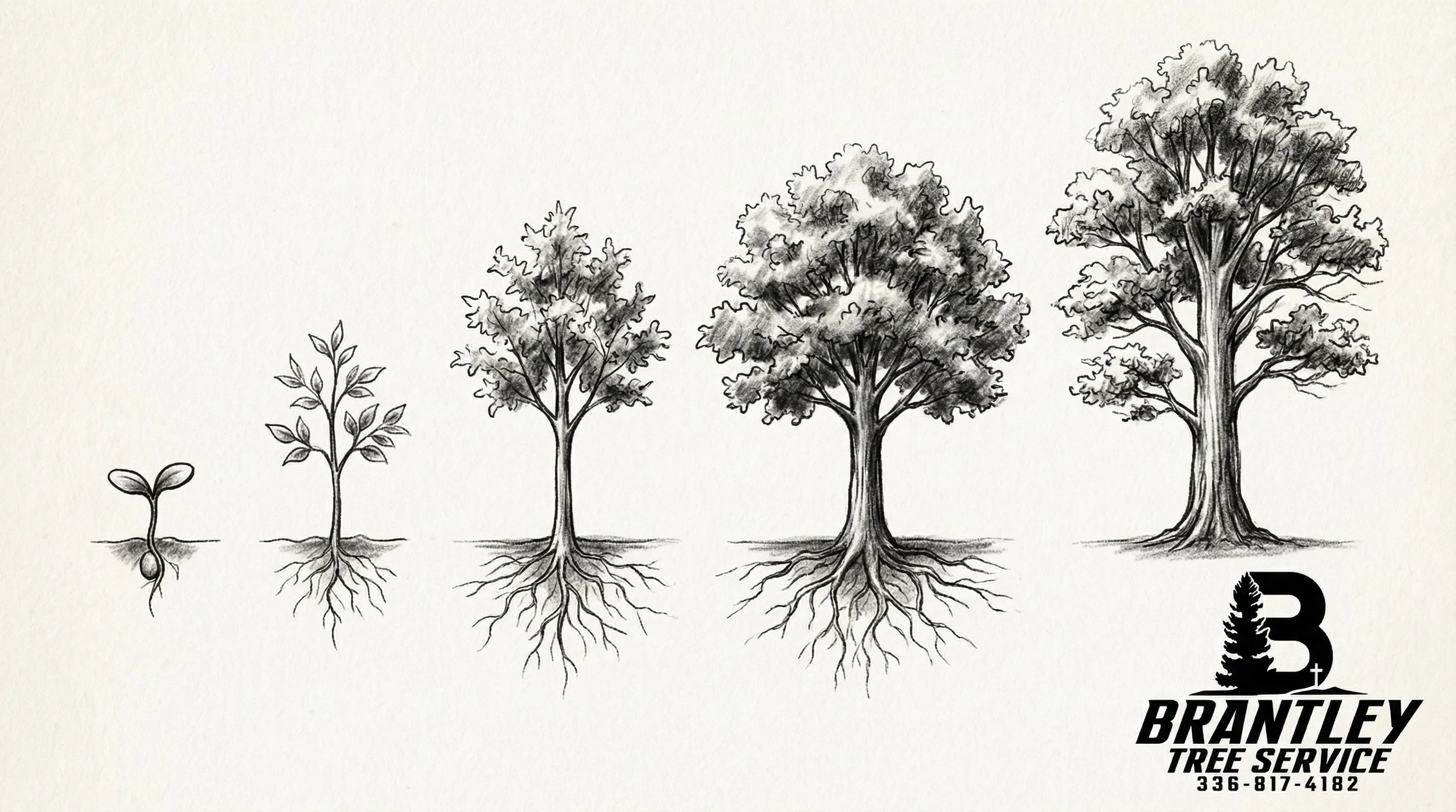
How Trees Grow and Why It Matters for Your Property
Trees are one of the most valuable features on any property in North Carolina. They provide shade, beauty, and long-term value. But what many homeowners do not realize is that every tree follows a lifecycle that can eventually lead to safety risks if not properly managed.
From a small sprout to a towering 100-foot tree, growth happens gradually. Over time, trees develop larger canopies, heavier limbs, and more complex root systems. While this growth is natural, it can become a problem when trees are located too close to homes, driveways, or power lines.
Understanding how trees grow is the first step in knowing when tree trimming, maintenance, or full tree removal is necessary.
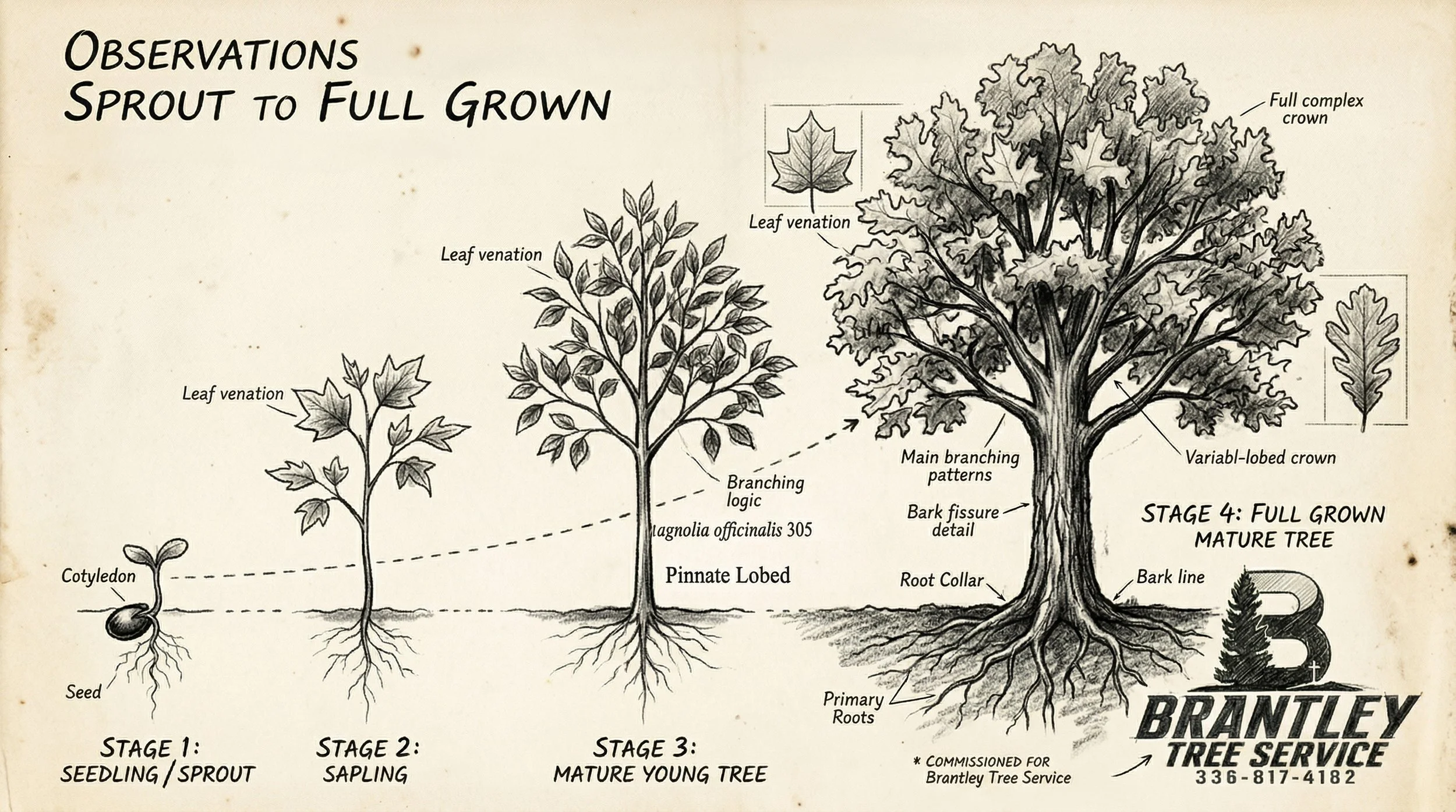
Understanding the lifecycle of a tree, from seedling to full maturity, helps homeowners recognize when a tree may become a safety risk near structures.
The Tree Lifecycle: From Healthy Growth to Potential Hazard
Every tree goes through several stages:
Seedling and sapling stage
Trees establish roots and begin growth upward
Young tree stage
Rapid growth, expanding canopy, stronger structure
Mature tree stage
Full height, heavy limbs, wide root system
At the mature stage, trees can become incredibly large and heavy. Bugs or internal rot can cause decay within the body of the trunk, where it is not visible from the outside. This is where problems often begin, especially in residential areas.
Large trees near homes can:
Overhang roofs and drop limbs
Shift or damage foundations with roots
Become unstable during storms
Develop internal decay that is not visible from the outside
This is especially common in areas like Jefferson, NC and the surrounding High Country, where older properties often have trees that have been growing for decades.
Why Trees Near Your Home Become a Risk Over Time
Many homes built in the 70s and 80s were surrounded by young trees that were harmless at the time. Fast forward 30 to 50 years, and those same trees are now towering over homes.
As trees grow larger:
Their weight increases significantly
Expanding branch systems means they catch more wind, making them more likely to break or fall during storms
Root systems may weaken or shift
Structural integrity can decline
This is why large tree removal near homes is one of the most common services we perform at Brantley Tree Service.
Why Professional Equipment Makes All the Difference
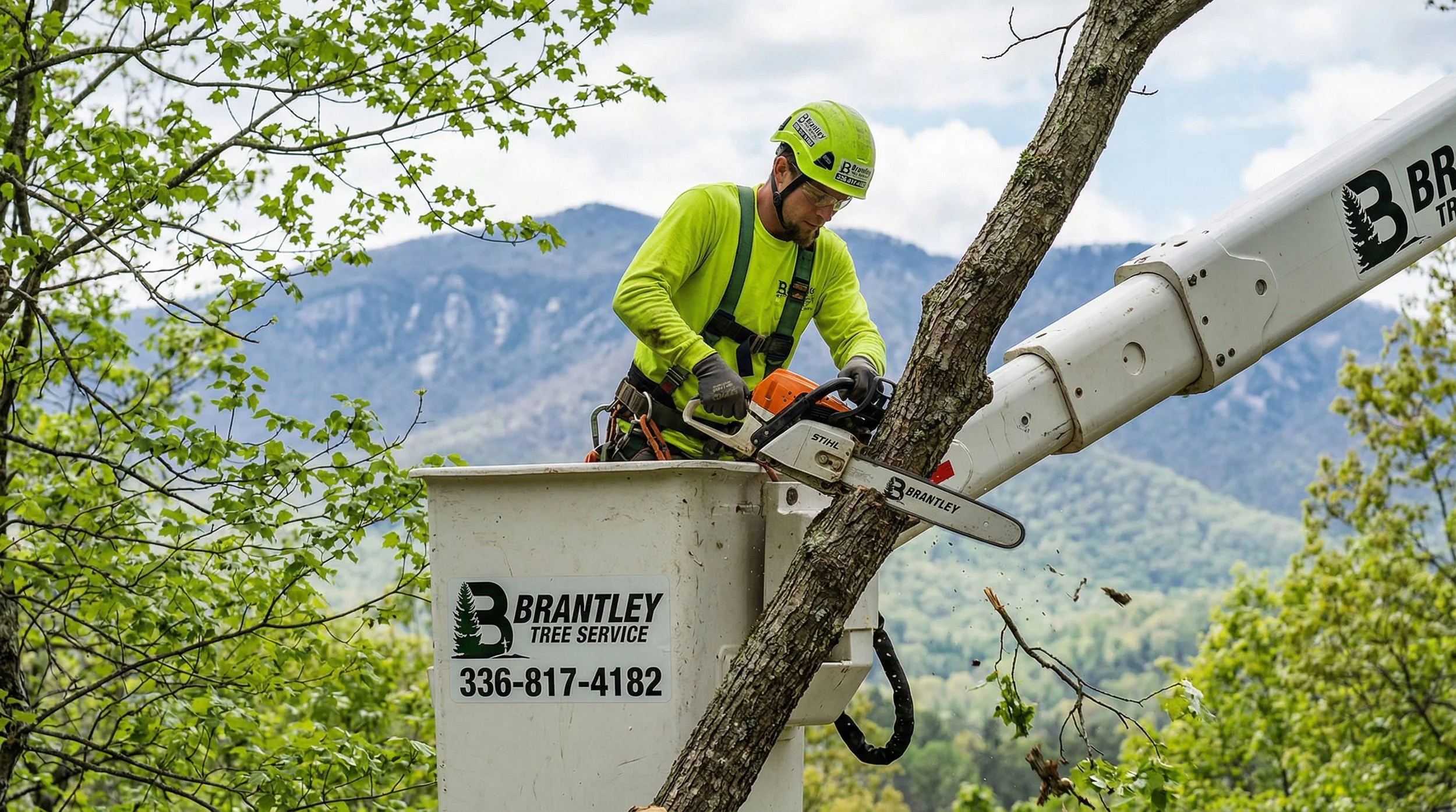
Removing large or hazardous trees is not a simple task. It requires specialized equipment and trained professionals to ensure safety.
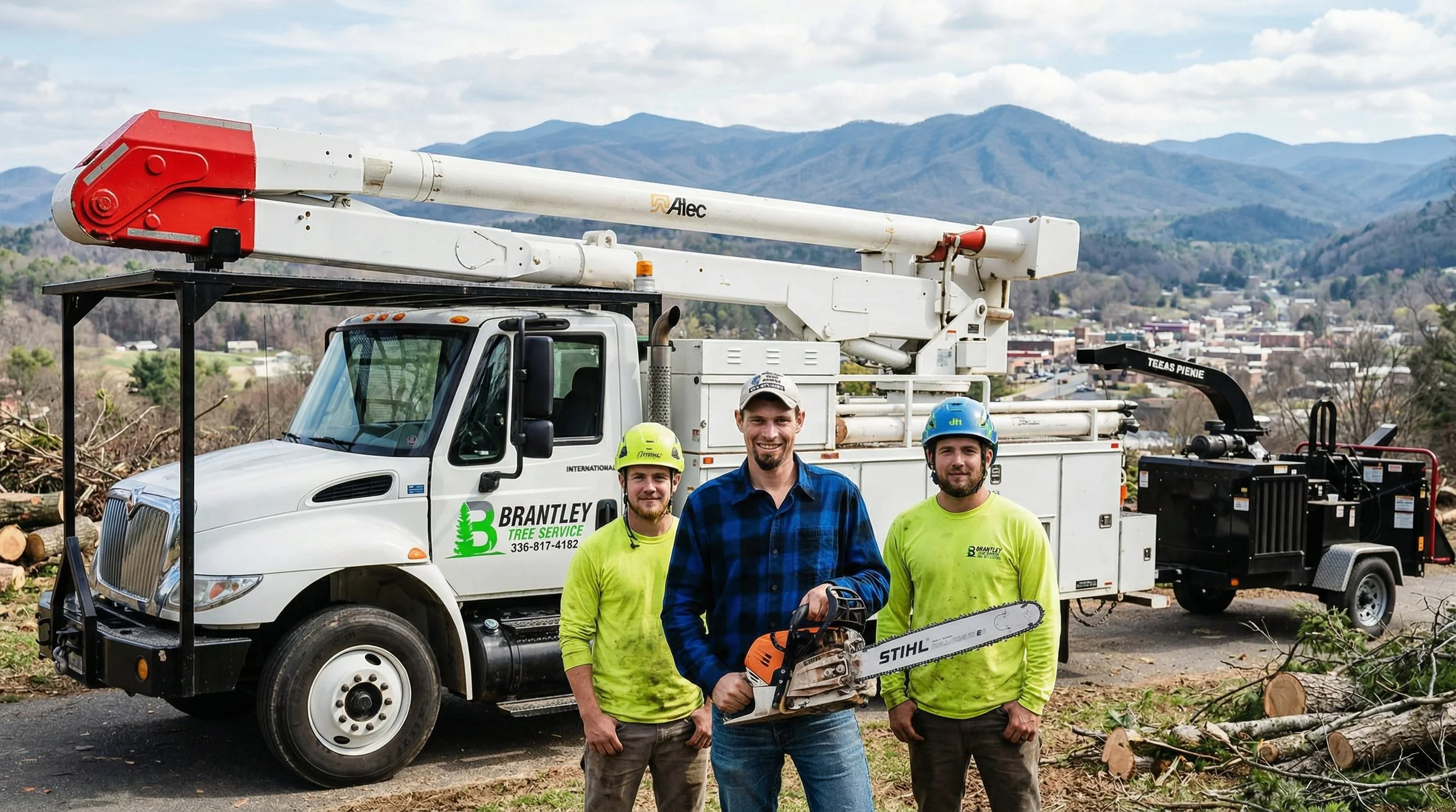
At Brantley Tree Service, we use:
100-foot bucket trucks for tall tree access
Crane-assisted lifting systems for heavy sections
High-capacity wood chippers for efficient cleanup
Excavators and hauling equipment for debris removal
This allows us to safely remove trees:
Near homes and structures
In tight residential spaces
Around power lines
Without damaging surrounding property
Signs It’s Time to Remove a Tree
If you notice any of the following, it may be time to consider removal:
• Tree leaning toward your home
• Large limbs hanging over structures
• Visible cracks in the trunk
• Dead or dying branches
• Trees growing too close to your house
• Storm damage or previous limb failure
When in doubt, it is always best to have a professional inspection.
👉 Contact us
Let’s make sure your property is safe, sound, and ready for whatever the season brings.