
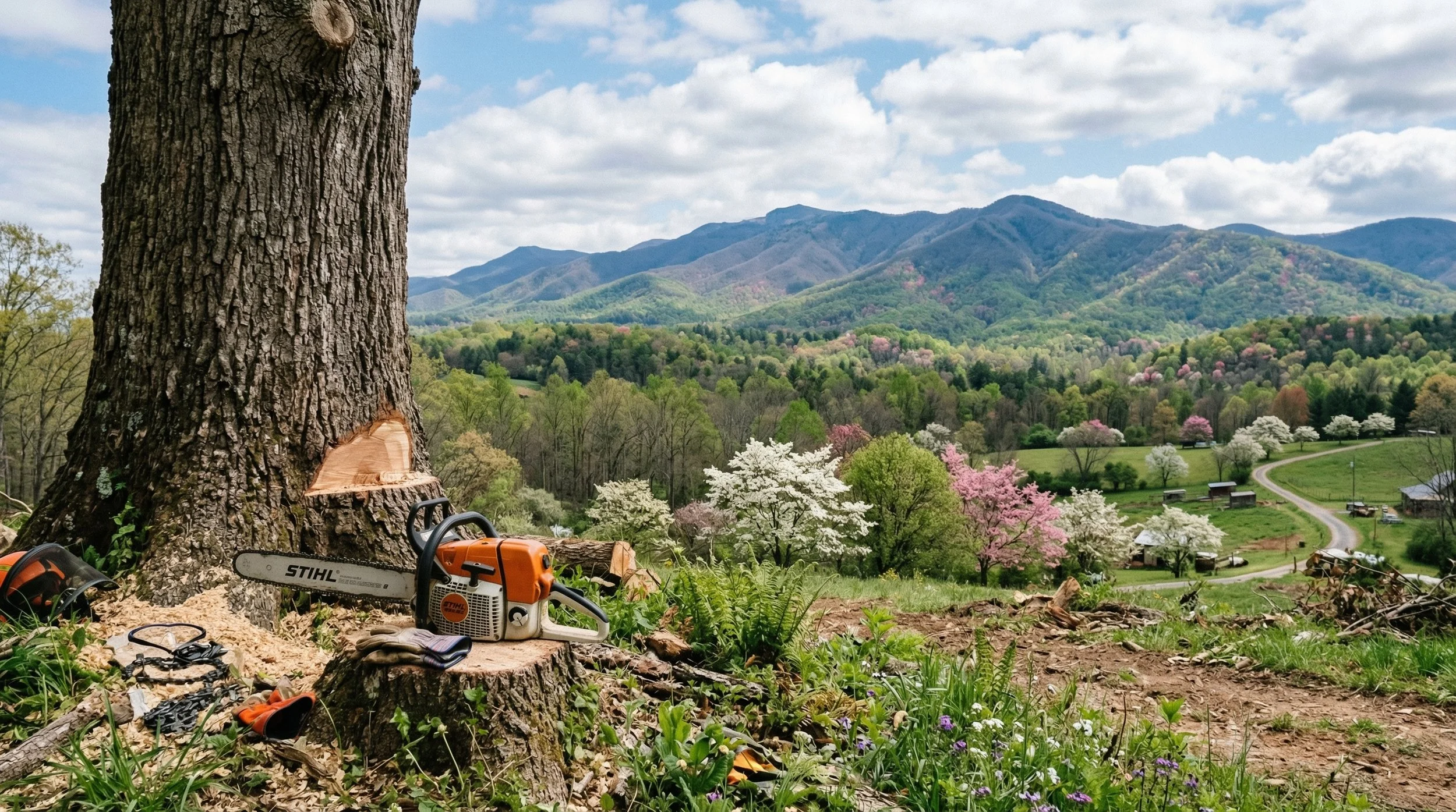
As spring arrives across North Carolina, trees begin waking up from winter dormancy. Warmer temperatures, increased rainfall, and longer days trigger rapid growth. While this season brings beautiful foliage and new life to the landscape, it can also expose hidden issues with trees that may have been weakened during winter.
Spring is one of the best times of the year to evaluate the health and safety of the trees on your property.
Why Spring Is an Important Time for Tree Maintenance

After winter storms, freezing temperatures, and heavy winds, some trees may develop structural weaknesses that are not immediately obvious. Cracks in the trunk, dead limbs, leaning trees, and root instability can become more apparent once the growing season begins.
Addressing these problems early in the season helps prevent bigger issues later in the year when storms become more frequent.
Some common signs that a tree may need professional attention include:
Dead or hanging limbs
Trees leaning toward structures or driveways
Visible cracks or decay in the trunk
Branches growing too close to your home or power lines
Storm-damaged trees from the winter months
Removing or trimming problematic trees early can protect your home, your property, and the surrounding landscape.
Preparing for Spring Storms
North Carolina is no stranger to spring storms. Heavy rain, strong winds, and saturated soil can cause weakened trees to fail quickly. Trees that may have stood through winter can suddenly become dangerous when exposed to new growth and storm conditions.
Proactively removing hazardous trees or trimming vulnerable branches can significantly reduce the risk of property damage during severe weather.
Professional Tree Removal Makes a Difference
Large or hazardous trees require specialized equipment and experienced crews to remove them safely. Professional tree removal ensures that surrounding structures, landscaping, and neighboring properties are protected throughout the process.
At Brantley Tree Service, our team handles everything from large tree removals to careful trimming and cleanup, leaving your property safe and looking its best.
Professional Tree Removal Makes a Difference
Large or hazardous trees require specialized equipment and experienced crews to remove them safely. Professional tree removal ensures that surrounding structures, landscaping, and neighboring properties are protected throughout the process.
At Brantley Tree Service, our team handles everything from large tree removals to careful trimming and cleanup.
Schedule a Tree Evaluation This Spring
If you have trees on your property that concern you, spring is the perfect time to have them looked at. Catching potential hazards early can save you time, money, and stress later in the year.
Visit our website and use the contact page to request a quote or schedule a consultation. Our team at Brantley Tree Service is ready to help you keep your property safe and your trees healthy this season.
Why Brantley Tree Service Is the Right Call
Brantley Tree Service is more than just a chainsaw and a truck. We are a fully insured, family-owned company with the right tools and expertise to handle North Carolina’s most difficult and high-risk tree removal jobs. Our services include:
• 100-foot bucket trucks for safe removals in tight or elevated areas
• Professional clearance near power lines, structures, and fencing
• Emergency storm cleanup and debris removal
• Certified arborist inspections for structural integrity
• Detailed planning to protect your home, roof, and landscape
Whether it is a fallen pine across your yard, a leaning oak near your home, or a split trunk threatening your fence, Brantley Tree has the experience and gear to do the job safely and quickly.
👉 Contact us
Let’s make sure your property is safe, sound, and ready for whatever the season brings.